
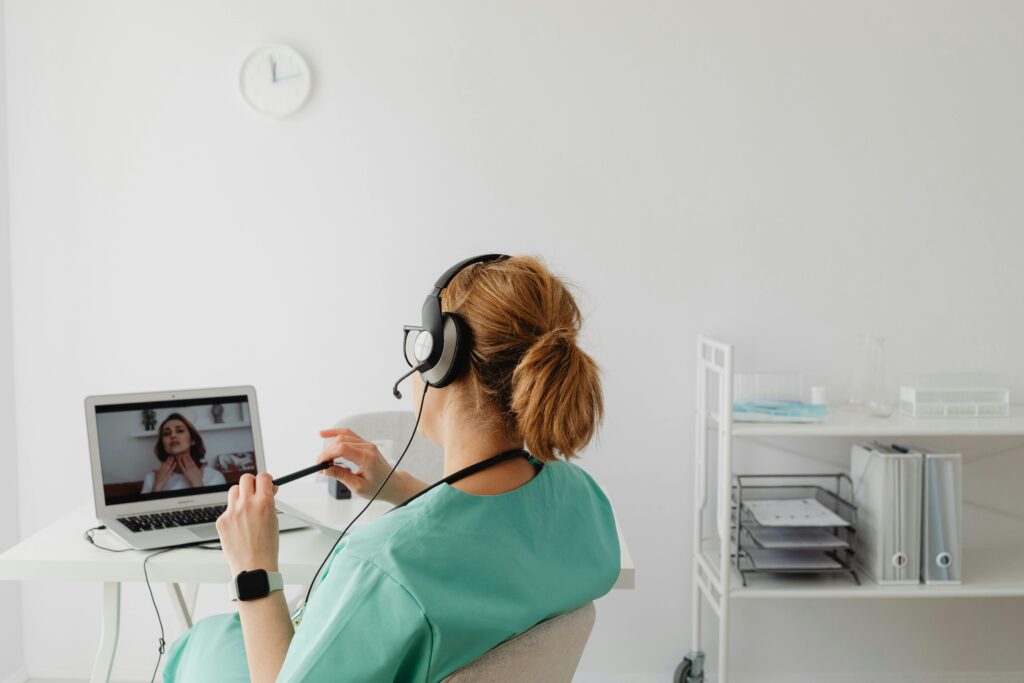
Kudos to you for being part of a much-needed field in today’s stressful and chaotic world, where care is a necessity but not always available. Nursing is a fantastic way to make a difference to society through service and empathy, helping people cope with frustrating health issues.
However, nursing has lately become a very challenging field. The 2024 National Nursing Workforce Survey found that almost 40% of nurses plan to leave the workforce soon, citing stress and burnout as the primary causes. The workload can be excessive, with administrative tasks filling many hours and stretching beyond regular shifts.
In this scenario, more professionals now consider freelancing positions. These opportunities can help you balance your passion for nursing with better time management and flexibility.
1. Virtual Nursing
How about working closely with patients in primary care settings, but through a virtual medium? Think: Delivering care and answering queries related to health problems through online appointments over your laptop or phone.
Virtual nursing and telehealth solutions have become popular among busy people who may miss in-person appointments. It is also beneficial for urgent situations, such as during travel, when patients need timely support but are unsure where to turn.
A MedCity News feature highlights that virtual care models in nursing have become standard across many US hospitals. This approach addresses the problems of workforce shortages and the increasing complexity of patient health concerns. Moreover, the availability of improved technological solutions in healthcare has made a virtual format of care delivery easier to implement and also more accessible.
Due to the virtual nature of these roles, they entail a degree of autonomy and authority that mandates exceptional skills. For example, if you pursue a direct entry nursing master’s, you will likely learn with a strong focus on quality and safety in clinical practice. The hands-on nature of the curriculum will equip you to work with confidence and minimal supervision.
Elmhurst University notes that such programs also help learners acquire clinical leadership skills for working in interprofessional teams. These competencies help them explore various roles, both full-time and freelance.
You can look for these opportunities in outpatient clinics and local community health centers. They may have openings based on hourly availability for handling patient interactions.
2. Nurse Coach
Teaching opportunities are also a viable plan to stay attuned to nursing while mitigating the stress of working an entire shift in direct care delivery.
As a nurse coach or educator, you can take up part-time positions in educational settings. Your role will encompass imparting nursing skills to new learners based on the curriculum of the specific institute.
Coaching roles are ideal for nurses who have firsthand experience working in hospitals or clinics and dealing with patients. This helps them support students with understanding the experiential aspect of the career, thus preparing them for the stressors to come.
Nursing Times reports that the field is witnessing an educator shortage, which can affect the quality of care in primary and community settings. Over time, this may negatively impact health outcomes and raise hospital dependency. All the more reason that freelance roles will be in demand to bridge the gap.
3. Nurse Writer
Freelance writing, the original gig, is another opportunity you can pursue if you want to focus on non-clinical aspects of nursing.
In this role, you will share your domain-specific knowledge with the client’s audience, usually patients and caregivers. In some cases, you may write for organizational stakeholders, such as investors and partners, who may be considering a policy-level change.
In fact, entering this field with specialized knowledge can help you stand out from the crowd and ensure that verified, well-researched content goes to the community.
With AI on the scene, many writers are worried about potentially becoming redundant in their jobs. However, this is likely to be less true when you bring original ideas and real-life experience into the picture. The Conversation puts it well: standardized and commodified jobs may be replaced by AI, but not inimitable, essentially human insight.
4. Legal Nursing Consultant
This is ideal for nurses who are fascinated with the workings of the legal world. Regardless of what Law and Order might show, criminal proceedings and medical malpractice cases demand a thorough investigation that can take months. They involve working with nurses for expert opinions on case details.
For example, in a car collision, the victim may claim damages for a back injury. As the nurse consultant on the case, you will be entrusted to verify the basis of the claim, i.e., ascertaining whether it was preexisting or was indeed caused by the crash.
Many nurse consultants work part-time with legal entities and as the official POC in healthcare facilities. It can be an exciting, albeit non-clinical role, that merges multiple disciplines.
Nursing, although a vocation people choose to serve and connect with others, can be highly demanding. High burnout rates and poor pay discourage many professionals in this field. At the same time, they wish to continue providing support and care in some form, objectives that first drew them to this field.
Working as a freelance nurse can be one way to achieve a balance between your desire to practice and the fatigue or stress you feel in a full-time role.
Create your freelance profile
Join Jobbers and start applying to projects today. No commission.