
Editorial note: This piece draws on healthcare staffing industry reporting and the same market data our team tracks across the broader freelance-platform space, where nursing has quietly become one of the fastest-growing categories of gig work. Last updated: September, 2026 — every figure below has been checked against the most recently published version of its source; see the Disclaimer and Outbound Resources sections for details.
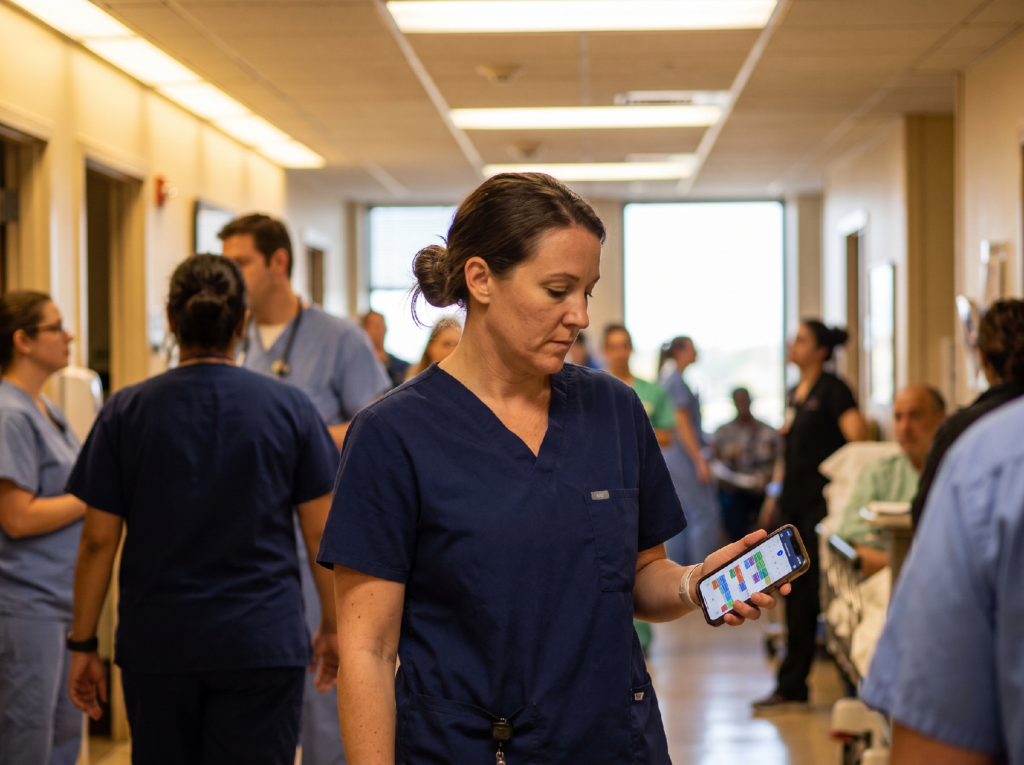
Hospitals across the country are short thousands of nurses, and at the same time, the freelance economy just hit a record size. Those two trends aren’t running in parallel by accident. Nursing has quietly become one of the fastest-growing corners of independent work in the United States, and the shift is reshaping how nurses think about pay, schedules, and who actually controls their careers.
For decades, nursing meant a badge, a single employer, and a fixed schedule. That’s changing fast. More RNs now piece together income from per diem shifts, short-term contracts, and app-based marketplaces, the same way a freelance designer or developer strings together gigs. The forces pushing nurses in this direction are structural, not personal preference.
The Nursing Shortage Behind the Gig Boom
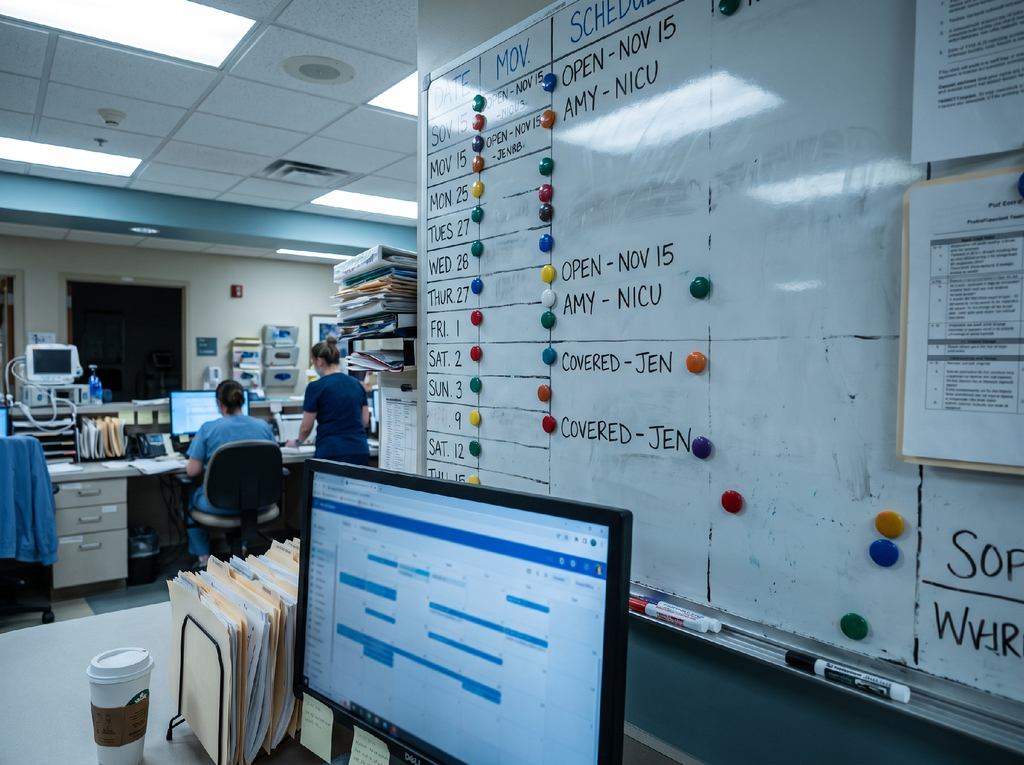
The numbers are stark. The Health Resources and Services Administration projects a roughly 10% national shortfall in registered nurses for 2026 — demand for about 3,393,590 full-time-equivalent RNs against a projected supply closer to 3,043,050, a gap of more than 350,000 FTE nurses. That RN-specific shortfall sits within a broader 8.06% shortage HRSA projects across all nursing occupations nationally when RNs, LPNs, and advanced practice roles are combined. Either way, it’s not a rounding error.
Turnover makes the gap worse. The 2026 NSI National Health Care Retention & RN Staffing Report found national RN turnover climbed to 17.6% in 2025, up 1.2 points from 16.4% the year before. NSI estimates the average cost of losing a single bedside RN at $60,090, which adds up to $4.2 million to $6.2 million a year for a typical hospital.
Demand isn’t slowing down either. The Bureau of Labor Statistics projects registered nurse employment to grow 6% between 2025 and 2035, faster than average, with about 180,800 RN job openings expected annually and a median annual wage of $97,550 as of May 2025. Facilities can’t hire permanent staff fast enough, so they’re leaning harder on flexible, on-demand staffing instead of only chasing expensive travel contracts.
Picture a nurse who’s tired of mandatory overtime and wants more say over her schedule, the kind of frustration that shows up in break-room conversations at nearly every unit facing a staffing crunch. A decade ago, her options were limited to whatever her hospital offered or a traditional staffing agency that took a cut of every placement. Now she can open a marketplace of nursing jobs and pick up per diem shifts at facilities across her metro area, choosing when and where she works instead of waiting for a manager to build the schedule.
How Nursing Fits Into the Freelance Economy
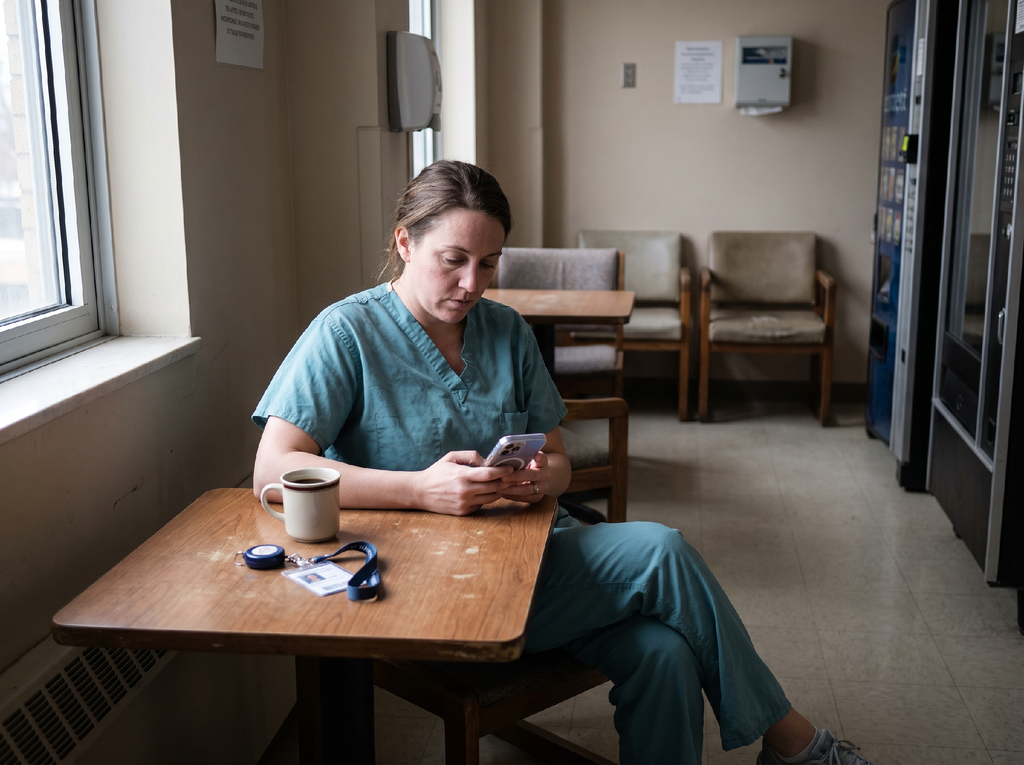
Nursing isn’t moving toward independent work in isolation. Industry research tracked by SQ Magazine puts the U.S. independent workforce at roughly 72.9 million people in 2025, about 36% of the total workforce, with some projections putting it at 86.5 million by 2027. Nursing is riding that same wave alongside consultants, designers, and developers.
That marketplace model is exactly what’s fueling the per diem nurse staffing market. Estimates vary by research firm and methodology, but most place its 2025 value somewhere between $10 billion and $16 billion, with continued growth projected through the early 2030s. Mordor Intelligence’s current analysis puts the market at $15.99 billion in 2025, growing to $23.74 billion by 2031, while other trackers cited by Nurse.org show similar upward trajectories from a somewhat lower 2025 base. This growth mirrors what we’ve tracked as freelance work expands into new sectors like healthcare, where digital shift-matching platforms are growing faster than the legacy staffing agencies that have dominated the industry for years.
What Nurses Should Watch For: Commission Fees and Platform Terms
Not every gig platform treats its workers the same way, whether you’re a nurse or a freelance copywriter. General freelance marketplaces like Upwork and Fiverr have long taken a percentage of every transaction, sometimes 10% or more, before a freelancer ever sees the money. Some healthcare staffing apps and agencies operate on a similar model, quietly skimming a cut off the top of every shift a nurse works.
Jobbers.io takes a different approach in the general freelance world. The platform charges no commission on completed work and lets freelancers and clients discuss payment terms directly, so professionals keep what they earn instead of watching a percentage disappear into platform fees. It’s a model worth using as a benchmark: whether you’re evaluating a nursing shift marketplace or a general freelance platform, transparency about who takes a cut, and how much, should be one of the first things you check before signing up.
A nurse working a handful of per diem shifts a month can lose thousands of dollars a year to hidden commissions without noticing, since the fee is often baked into the rate rather than itemized on a pay stub. Reading the fine print on how commission structures vary across gig platforms isn’t paranoia; it’s basic financial hygiene.
The Trade-offs: Flexibility vs. Benefits and Stability
Gig and per diem nursing isn’t a free lunch. Nurses often earn more per shift than a comparable staff position and get real control over their schedules. But most gig arrangements come without health insurance, retirement contributions, paid time off, or guaranteed hours. A slow month at a facility can mean a genuinely slow paycheck.
The American Nurses Association has pointed to the ongoing shortage as a driver of burnout, and some hospitals are responding by building internal float pools rather than relying solely on outside marketplaces. These pools let staff nurses pick up extra shifts across departments within the same health system, keeping benefits intact while still offering some flexibility. It’s not a perfect substitute for gig work, but it shows facilities are taking the appeal of independent scheduling seriously.
For most nurses, gig work functions best as a supplement, not a replacement, for traditional employment. Nurses considering a bigger leap into independent shifts should think about it the way any freelancer would approach the broader independent-work boom: one part of a diversified income strategy, not a wholesale career overhaul made overnight.
Disclaimer
The statistics, figures, and market data cited in this article come from named, publicly available sources, including the Bureau of Labor Statistics, the Health Resources and Services Administration, NSI Nursing Solutions, SQ Magazine, Mordor Intelligence, Nurse.org, and other independent market research aggregators, as of the time of publication. Nursing shortage figures, wage data, and market projections change over time, get revised by the issuing organizations, and vary by region and facility type. Readers should independently verify current numbers, pricing, and terms directly with the original sources before making career or business decisions based on this information.
Frequently Asked Questions
What is gig nursing and how does it work?
Gig nursing refers to per diem or short-term contract shifts that nurses book through apps or online marketplaces instead of working for a single employer. Nurses set their own availability and choose shifts at different facilities based on pay, location, and schedule fit.
Is the nursing shortage really driving more nurses toward gig work?
Yes. HRSA projects a roughly 10% national shortfall in registered nurses for 2026 (part of an 8.06% shortage across all nursing occupations combined), and NSI reports RN turnover climbed to 17.6% in 2025. Together, these numbers show facilities increasingly turning to flexible staffing models to fill gaps that permanent hiring alone can’t close fast enough.
Do gig nursing platforms charge commissions like freelance marketplaces?
It depends on the platform. Some staffing apps and agencies take a percentage of every shift, similar to how some general freelance marketplaces charge fees. Others use commission-free models where workers keep their full pay and negotiate terms directly.
Does Jobbers.io charge commission for nurses or other healthcare freelancers?
No. Jobbers.io is a commission-free freelance marketplace: freelancers and clients agree on payment terms directly, and the platform doesn’t take a percentage of completed work. Jobbers.io isn’t a dedicated per diem nursing-shift marketplace, but healthcare professionals offering consulting, medical writing, telehealth support, or similar freelance services can use it to keep everything they negotiate with clients.
What should a nurse check before joining a shift-based gig platform?
Verify the platform checks licensing and credentials properly, confirm how and when payment is made, look into how facilities are vetted, and read the fee structure carefully.
Is gig or per diem nursing a good long-term career strategy?
For many nurses, it works best as a supplement to traditional employment rather than a full replacement. It offers flexibility and often higher per-shift pay, but usually lacks benefits, so pairing it with steadier employment tends to be the more balanced approach.
Where can nurses verify current nursing shortage and wage data?
The Bureau of Labor Statistics and the Health Resources and Services Administration are the most authoritative, regularly updated sources for employment projections, wage data, and workforce shortage figures.
Outbound Resources
- U.S. Bureau of Labor Statistics, Occupational Outlook Handbook – Registered Nurses: https://www.bls.gov/ooh/healthcare/registered-nurses.htm
- Health Resources and Services Administration (HRSA), Health Workforce Projections: https://bhw.hrsa.gov/data-research/projecting-health-workforce-supply-demand
- NSI Nursing Solutions, 2026 National Health Care Retention & RN Staffing Report: https://www.nsinursingsolutions.com/documents/library/nsi_national_health_care_retention_report.pdf
- American Nurses Association (ANA), Nurse Staffing Crisis resources: https://www.nursingworld.org/practice-policy/nurse-staffing/nurse-staffing-crisis/
- SQ Magazine, Freelance Economy Statistics: https://sqmagazine.co.uk/freelance-economy-statistics/
- Mordor Intelligence, Per Diem Nurse Staffing Market Report: https://www.mordorintelligence.com/industry-reports/per-diem-nurse-staffing-market
- Nurse.org, Per Diem Nursing Market Growth: https://nurse.org/news/per-diem-nursing-market-growth/
Conclusion
Nursing’s move toward gig and per diem work isn’t a passing trend; it’s the same structural change that’s already reshaped how millions of Americans earn a living outside a single employer. The shortage numbers explain why facilities need flexible staffing, and the freelance-economy numbers explain why nurses are increasingly comfortable stepping into that role.
What separates a good gig arrangement from a bad one usually comes down to something simple: who keeps the money you earn. Platforms that skip commissions and let workers negotiate pay directly — the same principle Jobbers.io applies across general freelance work — set a standard nurses should expect from any shift marketplace. As this movement grows, the platforms that respect nurses’ and freelancers’ earnings will define its next phase.
Create your freelance profile
Join Jobbers and start applying to projects today. No commission.